

Complete Guide to SEO Ecommerce 2026
In the rapidly evolving landscape of e-commerce, achieving and maintaining a strong online presence is paramount for the success of any business. As we look ahead to the year 2026, the role of SEO in e-commerce is poised to undergo significant advancements, offering new opportunities for brands to enhance their visibility, attract targeted traffic, and drive conversions. This article delves into the future of SEO in e-commerce, with a focus on how brands can leverage BigCommerce to capitalize on the upcoming trends and propel their growth through organic means.
ECommerce SEO
– Implementing advanced AI-powered SEO strategies to optimize product pages and enhance overall website visibility.
– Leveraging BigCommerce’s robust SEO capabilities to improve website structure, meta tags, and schema markup for better search engine rankings.
– Utilizing AI-driven tools to analyze and refine website content for enhanced relevance and engagement.
SEO Audit
– Conducting comprehensive SEO audits to identify and rectify technical SEO issues, improve site performance, and ensure adherence to best practices.
– Utilizing BigCommerce’s SEO audit tools to assess website health, identify areas for improvement, and track progress over time.
Keyword Research
– Harnessing AI-driven keyword research tools to identify and target high-value, relevant keywords for product pages, categories, and content.
– Utilizing BigCommerce’s keyword research features to uncover valuable insights and opportunities for optimizing content and driving targeted traffic.
Local SEO
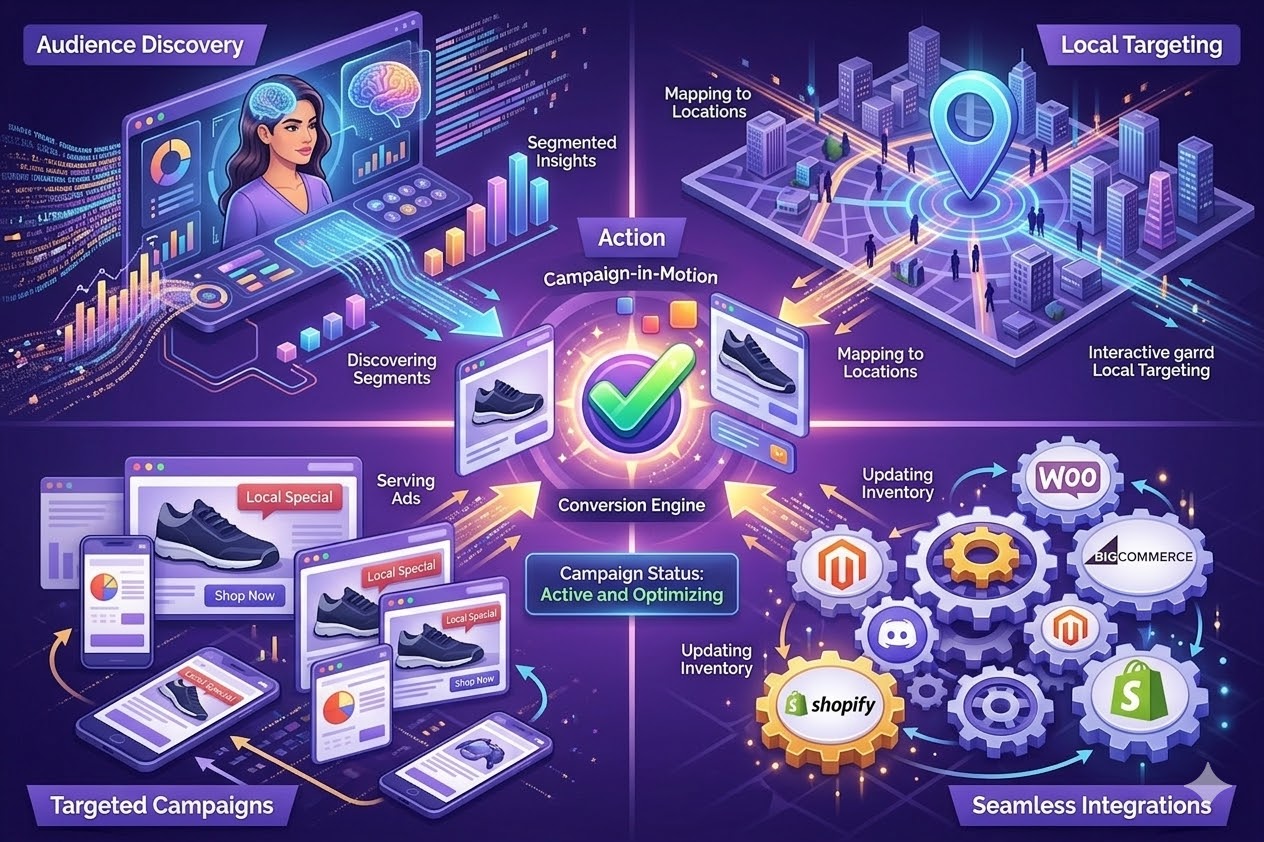
– Leveraging localized targeting and AI-driven insights to enhance visibility in local search results and capture geographically relevant traffic.
– Utilizing BigCommerce’s local SEO capabilities to optimize store locations, business information, and local landing pages for improved local search rankings.
Organic Growth
– Implementing AI-powered strategies to drive sustainable organic growth, increase brand visibility, and capture qualified traffic over time.
– Utilizing BigCommerce’s seamless integrations and AI capabilities to streamline the process of scaling organic traffic and conversions.
Contextual Placement
– Leveraging AI-based contextual placement strategies to ensure targeted placement of content and ads across digital platforms for maximum impact.
– Utilizing BigCommerce’s contextual placement features to optimize ad placements, content distribution, and audience targeting for enhanced visibility and engagement.
Content Creation
– Harnessing AI-powered content creation tools to generate high-quality, relevant content at scale for product descriptions, articles, and blog posts.
– Leveraging BigCommerce’s content creation capabilities to streamline the process of creating and optimizing content for enhanced SEO performance.
Citations
– Utilizing AI-driven citation management tools to ensure consistent and accurate business information across online directories and platforms.
– Leveraging BigCommerce’s citation management features to maintain a strong online presence and enhance local search visibility.
Brand Reputation
– Implementing AI-driven strategies to monitor and manage brand reputation across digital channels, social media, and review platforms.
– Utilizing BigCommerce’s reputation management tools to proactively manage and enhance brand reputation for improved trust and credibility.
Conclusion:
As we look to the future of e-commerce in 2026, the integration of advanced AI-powered SEO strategies with the robust capabilities of BigCommerce presents unparalleled opportunities for brands to drive organic growth, enhance visibility, and capture qualified traffic. By harnessing the power of AI-driven insights, localized targeting, and seamless integrations, e-commerce brands can position themselves for sustained success in the ever-evolving digital landscape.