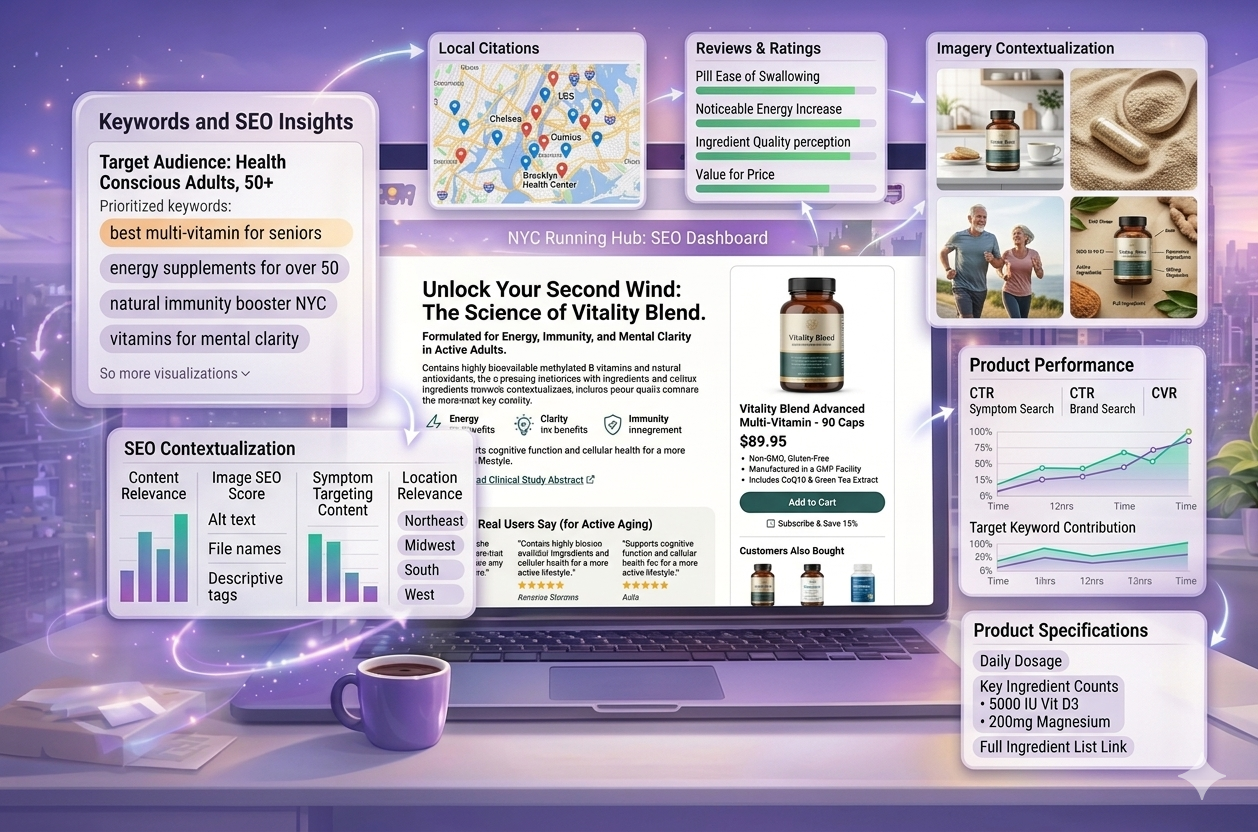


Complete Guide to Creating An SEO Strategy
Standing out and reaching your target audience is essential for success. Crafting a robust SEO strategy tailored to the unique needs of Shopify ecommerce brands can make a significant impact on visibility, traffic, and ultimately, revenue. This comprehensive guide will explore key elements of creating an effective SEO strategy for ecommerce brands using Shopify, empowering you to harness the power of search engine optimization to drive sustainable growth and achieve your business goals.
ECommerce SEO
When it comes to ecommerce, SEO plays a pivotal role in driving organic traffic and boosting sales. With a focus on Shopify, optimizing your online store for search engines is crucial for maximizing visibility and attracting potential customers. Key aspects of ecommerce SEO strategy for Shopify include:
– Optimizing product pages with relevant keywords and compelling, informative descriptions.
– Implementing structured data markup to enhance product visibility in search results.
– Leveraging Shopify’s built-in SEO features, such as customizable title tags and meta descriptions.
– Ensuring mobile responsiveness and fast page loading speed for a seamless user experience.
SEO Audit
Before diving into a new SEO strategy, conducting a thorough audit of your Shopify store’s current SEO performance is essential. An SEO audit can help identify areas for improvement and set a solid foundation for future optimization efforts. Key components of an SEO audit for Shopify ecommerce brands include:
– Analyzing website structure, metadata, and internal linking for optimization opportunities.
– Assessing page load speed and mobile-friendliness for improved user experience and search ranking.
– Evaluating backlink profile and identifying opportunities for link building and off-page optimization.
– Reviewing content quality, relevance, and keyword targeting across the Shopify store.
Keyword Research
Effective keyword research is the cornerstone of any successful SEO strategy for ecommerce brands on Shopify. By appreciating the search intent and behavior of your target audience, you can strategically optimize your store’s content and product pages to align with relevant search queries. Key aspects of keyword research for Shopify ecommerce SEO include:
– Identifying high-value keywords with commercial intent related to your products and niche market.
– Exploring long-tail keywords and semantic variations to capture more specific search queries.
– Utilizing keyword research tools to gauge search volume, competition, and potential for ranking.
– Incorporating localized keywords to target specific geographic markets and enhance local SEO efforts.
Local SEO
For Shopify ecommerce brands with physical retail locations or serving specific geographic markets, local SEO is instrumental in driving foot traffic and online sales. Local SEO strategies for Shopify can include:
– Optimizing store information, including name, address, and phone number, for local search visibility.
– Creating and optimizing Google My Business listings to appear in local map packs and search results.
– Generating local citations and building backlinks from relevant local directories and websites.
– Leveraging customer reviews and testimonials to build trust and credibility within local communities.
Organic Growth
Sustainable organic growth is the ultimate goal of an effective SEO strategy for Shopify ecommerce brands. By focusing on long-term value and user-centric optimization, you can position your store for continuous growth and increased revenue. Key considerations for organic growth through SEO on Shopify include:
– Developing a content strategy that aligns with your target audience’s interests, needs, and pain points.
– Implementing on-page and technical SEO best practices to improve crawlability, indexation, and site architecture.
– Monitoring and analyzing user engagement metrics and organic search performance to refine your strategy.
– Adapting to search engine algorithm updates, industry trends, and consumer behavior to maintain competitive visibility.
Contextual Placement
Contextual placement of keywords and content within your Shopify store is paramount for SEO success. By strategically incorporating targeted keywords and relevant content throughout your website, you can signal search engines about the context and relevance of your offerings. Key tactics for contextual placement in Shopify ecommerce SEO include:
– Intelligently integrating keywords into product titles, descriptions, headings, and alt text for images.
– Creating informative and engaging blog posts, guides, and resources that naturally incorporate targeted keywords.
– Interlinking related product pages and content to provide a cohesive and user-friendly website experience.
– Emphasizing semantic relevance and thematic cohesion across different sections of the Shopify store.
Content Creation
Compelling and valuable content lies at the heart of an effective SEO strategy for Shopify ecommerce brands. Through strategic content creation, you can not only enhance your store’s search visibility but also establish authority, trust, and brand resonance with your audience. Key aspects of content creation for Shopify ecommerce SEO include:
– Crafting product descriptions and category pages that balance SEO optimization with persuasive storytelling.
– Developing blog content that addresses common customer queries, industry insights, and product usage tips.
– Creating multimedia content such as videos, infographics, and interactive elements to enrich user experience.
– Encouraging user-generated content, social proof, and community engagement to foster brand advocacy.
Citations
Citations, or online mentions of your business’s name, address, and phone number, are instrumental in local SEO and building credibility for Shopify ecommerce brands. By ensuring accurate and consistent citations across relevant platforms, you can improve your store’s visibility and trustworthiness. Key strategies for citations in Shopify ecommerce SEO include:
– Claiming and optimizing business listings on local directories, review sites, and industry-specific platforms.
– Monitoring and managing customer feedback, ensuring positive sentiment and addressing negative reviews.
– Leveraging structured data markup to enhance local business information and display rich snippets in search results.
– Cultivating partnerships and sponsorships with local organizations, events, and influencers for brand exposure.
Brand Reputation
A strong brand reputation is a cornerstone of successful SEO for Shopify ecommerce brands, influencing search visibility, customer trust, and competitive positioning. Building and managing your brand reputation through SEO involves:
– Encouraging and responding to customer reviews, testimonials, and feedback across digital touchpoints.
– Monitoring and addressing brand mentions, sentiment, and online reputation through social listening and monitoring tools.
– Cultivating thought leadership and expertise through content marketing, industry contributions, and knowledge sharing.
– Establishing a distinct brand voice, visual identity, and positioning that resonates with your target audience.
Crafting an effective SEO strategy tailored to the unique needs of Shopify ecommerce brands is instrumental in driving sustainable growth, increasing revenue, and maximizing online visibility. By leveraging the power of AI-powered SEO, localized targeting, audience insights, and seamless integrations, ecommerce brands can unlock new avenues for organic growth and long-term success.