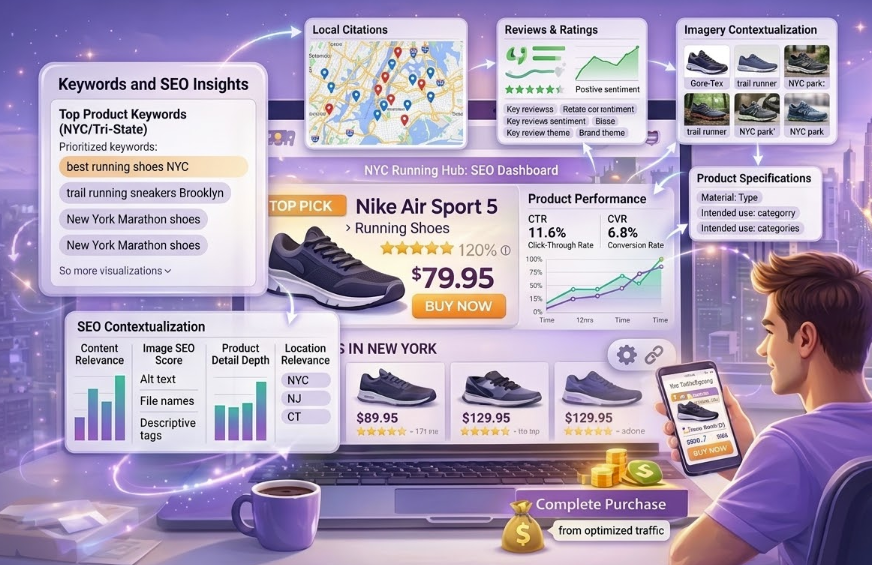


Complete Guide to SEO For Retail Websites
Driving organic growth is essential for retail websites to thrive and stay ahead of the curve. With the ever-increasing reliance on online shopping, harnessing the power of search engine optimization (SEO) has become a vital aspect of a successful e-commerce strategy. In this comprehensive guide, we will explore the crucial role of SEO for retail websites, with a specific focus on Shopify, and how it can be leveraged to boost visibility, attract qualified traffic, and ultimately drive more conversions.
ECommerce SEO
When it comes to e-commerce, SEO is a game-changer. By optimizing your retail website for search engines, you can significantly enhance your online presence, reach a wider audience, and ultimately increase sales. Shopify provides a robust platform for e-commerce businesses, and by implementing effective SEO strategies, you can maximize its potential to propel your brand to new heights.
– Implementing on-page SEO best practices to optimize product pages, category pages, and overall site structure.
– Leveraging Shopify’s built-in SEO features to enhance meta tags, URLs, and content optimization.
– Utilizing schema markup to provide search engines with valuable product information, leading to enhanced visibility in search results.
SEO Audit
Conducting a comprehensive SEO audit is the first step towards optimizing your retail website on Shopify. By identifying strengths, weaknesses, and areas for improvement, you can lay the groundwork for a successful SEO strategy that aligns with your business goals.
– Assessing site speed, mobile-friendliness, and technical SEO aspects to ensure a seamless user experience.
– Analyzing backlink profiles, content quality, and keyword rankings to identify opportunities for improvement.
– Utilizing tools such as Google Search Console and Shopify’s SEO apps to gather valuable insights and data for informed decision-making.
Keyword Research
Keywords form the foundation of any successful SEO strategy. In the e-commerce realm, acknowledging the search intent of potential customers and targeting relevant keywords is crucial for driving organic traffic and increasing conversions on Shopify.
– Conducting in-depth keyword research to identify high-intent, long-tail keywords with strong commercial value.
– Leveraging Shopify’s keyword research tools and integrations to uncover valuable keyword opportunities specific to e-commerce.
– Mapping keywords to different stages of the customer journey, aligning content and product pages to address user intent effectively.
Local SEO
For retail websites with a physical presence, local SEO plays a pivotal role in driving foot traffic to brick-and-mortar stores. With Shopify’s seamless integrations and localized targeting capabilities, harnessing the power of local SEO can significantly enhance the visibility of your e-commerce brand within specific geographic areas.
– Optimizing Google My Business listings to ensure accurate and consistent business information across local search results.
– Leveraging Shopify’s geo-targeting features to create location-specific landing pages and targeted ad campaigns.
– Encouraging customer reviews and testimonials to build credibility and enhance local visibility for retail websites.
Organic Growth
Achieving sustainable organic growth is the ultimate goal for e-commerce brands. By tapping into Shopify’s extensive capabilities and integrating AI-powered SEO strategies, retail websites can position themselves for long-term success in the ever-evolving digital landscape.
– Leveraging AI-powered algorithms to optimize product recommendations, personalized content, and user experience on Shopify.
– Harnessing the power of predictive analytics to identify emerging trends, consumer behavior patterns, and opportunities for growth.
– Implementing dynamic pricing strategies, inventory management, and automated marketing based on AI-driven insights to drive organic growth.
Contextual Placement
Contextual placement of content and product offerings is essential for engaging potential customers and improving the overall user experience on Shopify. By leveraging contextual targeting and strategic content placement, retail websites can effectively capture the attention of their target audience and drive meaningful interactions.
– Utilizing Shopify’s dynamic content delivery capabilities to personalize on-site messaging, recommendations, and promotions based on user behavior and preferences.
– Implementing AI-driven content optimization to deliver contextually relevant product recommendations and enhance cross-selling and upselling opportunities.
– A/B testing different contextual placements and content strategies to identify the most effective approaches for driving conversions and fostering customer loyalty.
Content Creation
Compelling and relevant content is the cornerstone of a successful e-commerce SEO strategy. With Shopify’s content management capabilities and integrations, retail websites can create and curate engaging content that resonates with their target audience, establishing authority and driving organic traffic.
– Developing a content calendar aligned with seasonal trends, product launches, and promotional campaigns to drive organic visibility and engagement.
– Leveraging Shopify’s content optimization tools to enhance product descriptions, blog posts, and landing pages for maximum SEO impact.
– Utilizing AI-powered content generation and curation tools to streamline the creation process and ensure consistent quality across different content formats.
Citations
Building a strong online presence through citations and consistent business information across various platforms is essential for e-commerce brands. With Shopify’s integrations and local SEO capabilities, retail websites can enhance their citation profiles and foster trust and credibility among potential customers.
– Ensuring accurate and consistent P (Name, Address, Phone) information across online directories, review platforms, and social media profiles.
– Leveraging Shopify’s citation management tools to monitor and manage business listings, respond to customer reviews, and maintain a positive online reputation.
– Implementing local link building strategies to enhance citation authority and build a strong foundation for local SEO success.
Brand Reputation
Maintaining a positive brand reputation is crucial for e-commerce success. With the help of AI-powered sentiment analysis, social listening tools, and Shopify’s integrations, retail websites can monitor and manage their brand reputation effectively, fostering trust and loyalty among their customer base.
– Utilizing AI-driven sentiment analysis to gauge customer feedback, social media mentions, and online reviews, identifying areas for improvement and proactive reputation management.
– Leveraging Shopify’s customer feedback and review management features to encourage positive reviews, address negative feedback, and build a strong brand reputation.
– Implementing AI-powered social listening tools to monitor brand mentions, industry trends, and consumer sentiment, enabling proactive engagement and brand positioning.
Leveraging the power of SEO for retail websites on Shopify is a strategic imperative for e-commerce brands looking to drive organic growth, enhance visibility, and increase conversions. By integrating AI-powered SEO strategies, localized targeting, and audience insights, retail websites can harness the full potential of Shopify to achieve sustainable success in the competitive e-commerce landscape.